Why First Impressions Matter: Speeding Up Your E-commerce Site for Autumn
As August rolls on and the summer holidays begin to wind down, the retail sector starts looking toward the horizon. Autumn is rapidly approaching, and trailing right behind it is the colossal Q4 shopping rush: Black Friday, Cyber Monday, and the festive season.
If you run an online store, now is the time to prepare your digital storefront. But before you start planning your seasonal discounts or expanding your inventory, you need to answer one critical question: How fast is your website?
In the world of e-commerce web design, a slow-loading website isn’t just a minor annoyance for your customers; it is a conversion killer. Here is why website speed is the most important part of your first impression, and why you need to optimise it before the autumn rush.
The Cost of a Slow Load: Understanding Bounce Rates
Imagine walking into a high street shop, but the front door is incredibly heavy, sticking to the frame, and takes a full ten seconds to wedge open. Most people wouldn’t bother; they’d turn around and go to the shop next door.
Your website’s loading screen is that front door.
When a user clicks your link and the page takes too long to load, they leave before ever seeing your products. In digital terms, this is called a “bounce.” Studies consistently show that if a page load time goes from 1 second to 3 seconds, the probability of a bounce increases by over 30%. If it hits 5 seconds, that probability shoots up to 90%.
Effective bounce rate reduction starts with raw speed. If your site is lightning-fast, customers stay, browse, and ultimately buy.
Pleasing the Algorithm: Google Core Web Vitals
Speed doesn’t just matter to human shoppers; it matters to Google.
Google explicitly uses site speed as a ranking factor for search results. To measure this, they use a set of metrics known as Core Web Vitals. These metrics evaluate the real-world user experience of a webpage, focusing on three main areas:
- Loading (Largest Contentful Paint – LCP): How long does it take for the main piece of content (like your hero image or product banner) to appear on the screen?
- Interactivity (Interaction to Next Paint – INP): How quickly does the site respond when a user clicks a button or adds an item to their cart?
- Visual Stability (Cumulative Layout Shift – CLS): Does the page jump around as it loads? (There is nothing worse than trying to click “Buy Now” and accidentally clicking a shifting ad instead).
If your e-commerce site fails the Core Web Vitals assessment, Google will penalise your search rankings. No matter how good your products are, if you are buried on page four of the search results, your Q4 sales will suffer.
How to Achieve Website Speed Optimisation
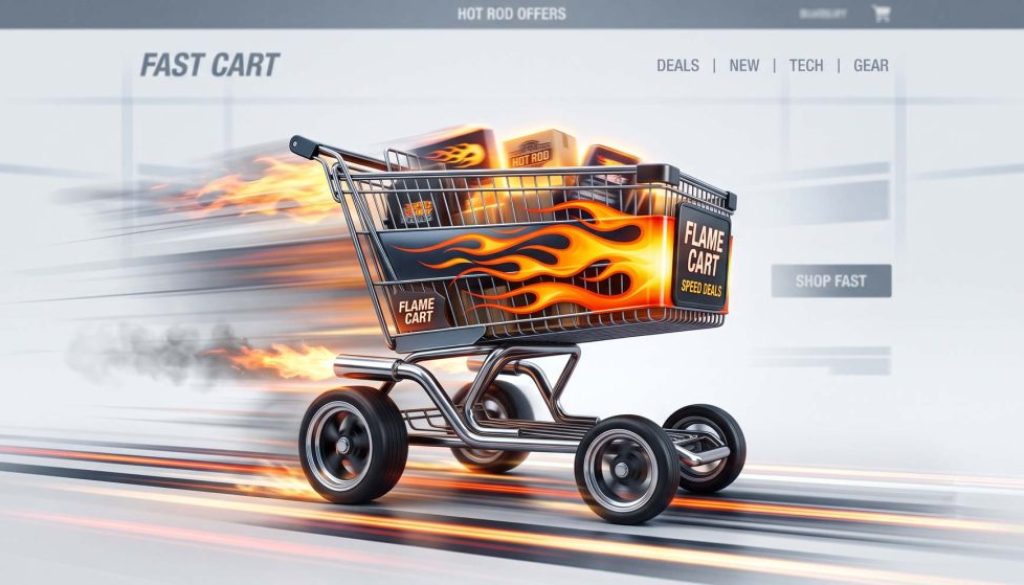
So, how do you put racing stripes on your digital shopping cart before the autumn rush hits? Website speed optimisation usually involves a few vital technical fixes:
- Image Compression: E-commerce sites are naturally image-heavy. Serving massive, uncompressed product photos is the number one cause of slow load times. Implement next-gen image formats (like WebP) and lazy loading to drastically speed things up.
- Minimising Code: Bloated JavaScript, excessive plugins, and messy CSS files force the browser to work overtime. Cleaning up the backend code makes the frontend fly.
- Upgrading Hosting: If you are running a major e-commerce operation on a budget shared-hosting plan, your site will inevitably crash when Black Friday traffic spikes. Upgrading to dedicated cloud hosting ensures you have the bandwidth to handle the rush.
Don’t Wait for the Q4 Rush
The worst time to fix your website is when thousands of potential customers are actively trying to use it. By auditing and upgrading your site architecture now, you guarantee a smooth, frictionless shopping experience when it matters most.
If your online store feels sluggish, it’s time to bring in the experts. Partnering with an agency that provides comprehensive digital marketing services and technical