Don’t Take the Bait: Spotting Modern Phishing Emails
We all know the classic “Nigerian Prince” email. He has £40 million trapped in a bank account, and if you send him your sort code, he’ll split it with you. For years, phishing emails were easy to spot: they were riddled with bizarre typos, aggressive capitalisation, and promises of unimaginable wealth from strangers.
If only cybercriminals were still that lazy…
Today, the digital landscape has completely shifted. Thanks to the rise of artificial intelligence and sophisticated social engineering, modern phishing attacks are terrifyingly convincing. They don’t look like spam from a stranger; they look like an urgent invoice from your primary supplier, or a quick request from your CEO.
To achieve robust cyber threat protection, businesses need to understand that the bait has changed. Here is a breakdown of how modern phishing works, and how to stop your team from getting hooked.
The Rise of AI and Business Email Compromise (BEC)
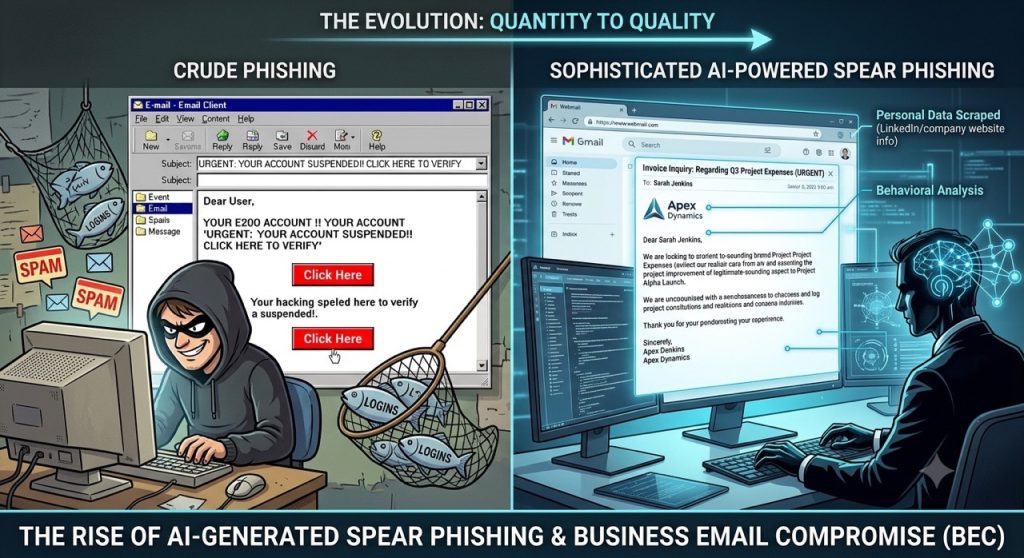 The biggest game-changer in recent years has been generative AI. Hackers no longer need to be fluent in English to write a convincing email. They can use AI tools to instantly draft flawless, professional, corporate-sounding messages that bypass traditional spam filters.
This has led to a massive spike in business email compromise (BEC). Instead of casting a wide, generic net, cybercriminals are doing their homework. They scrape LinkedIn to find out who your Finance Director is. They figure out your IT provider’s name. Then, they send a highly targeted “spear-phishing” email that looks completely legitimate.
The Anatomy of a 2026 Phishing Attack
So, what does a modern phishing attack actually look like? It usually relies on three core components:
- The Spoofed Sender: The email address will look almost identical to a trusted source. It might be accounts@microsoft-support.com instead of microsoft.com, or they might swap a lowercase “L” for an uppercase “I” in your CEO’s name. Often, it’s a perfectly cloned email template featuring your company’s actual logo and fonts.
- The Emotional Trigger: Hackers rely on human psychology. They want you to act before you think. The tone is usually urgent (“Your account will be suspended in 24 hours”), fear-inducing (“Overdue invoice penalty”), or helpful (“Click here to view your bonus allocation”).
- The Malicious Payload: The goal is to get you to click. This might be a link leading to a fake Microsoft 365 login page designed to steal your password. Alternatively, it might be an attachment (like a fake PDF invoice) that executes a script in the background, requiring urgent malware-prevention protocols to stop the infection from spreading across your network.
Building a Human Firewall
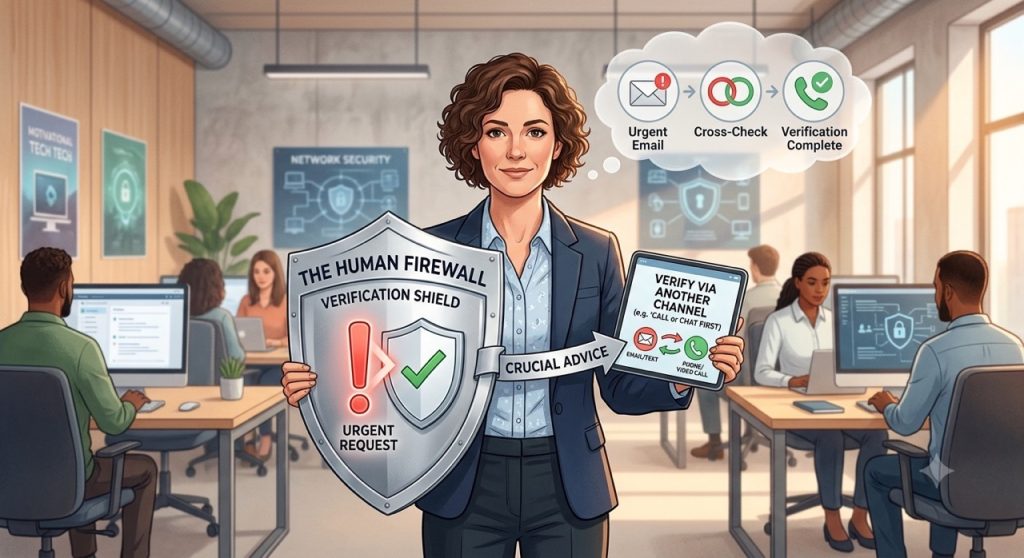 You can have the most expensive, military-grade firewalls on the market, but if an employee willingly hands over their password to a fake login page, that technology is useless. Your staff are your first and last line of defence.
Effective phishing email protection requires a shift in company culture.
1. Implement Verification Protocols
Create a company rule: if an email requests a sudden change in bank details, an urgent wire transfer, or a bulk purchase of gift cards (a classic scam), the employee must verify it via a different communication channel. A quick phone call or Teams message to the sender can stop a devastating financial loss.
2. Stop Trusting Links
If you receive an email from “your bank” saying there’s an issue with your account, don’t click the button in the email. Open your browser, type the bank’s actual web address into the search bar, and log in manually.
3. Invest in Continuous Training
An annual PowerPoint presentation on internet safety is no longer enough. Businesses need to implement continuous employee cybersecurity training. This includes running simulated, safe phishing campaigns against your own staff. Sending fake phishing emails to your team allows you to see who clicks the bait, offering a chance for immediate, low-stakes education.
Don’t Let Your Business Get Hooked
Cybercriminals are constantly refining their bait, but with the right knowledge and tools, you can keep your data safely out of their nets.
If you want to evaluate how vulnerable your current setup is, our team can help. We provide comprehensive security audits, advanced spam filtering, and interactive staff training designed to turn your employees into a human firewall.