Halloween Special: The Scariest Cyber Monsters Hiding in Your Network
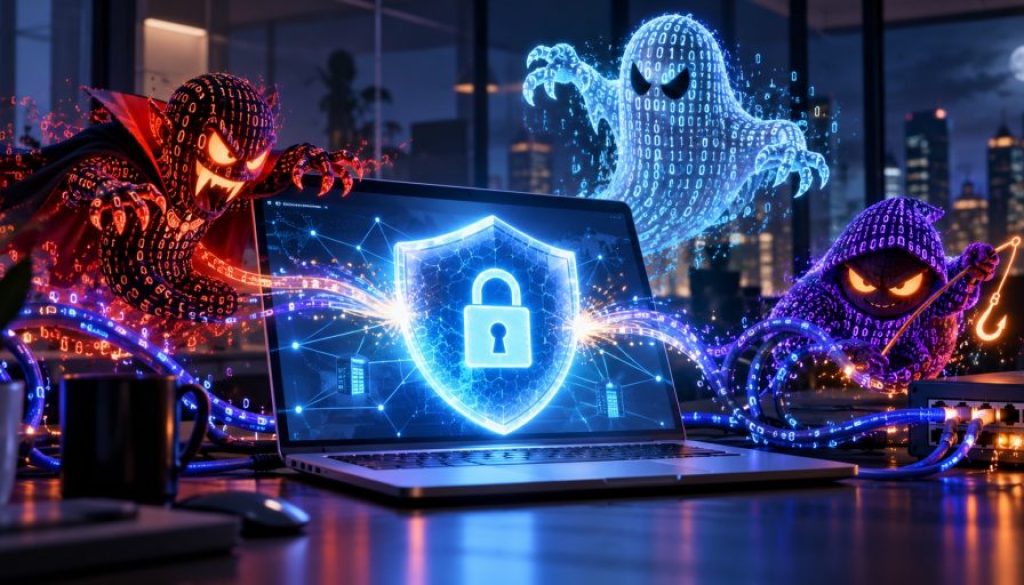
Halloween is the season for ghosts, ghouls and things that go bump in the night. But for a business, the most frightening creatures are often the ones hiding quietly inside the network.
Cyber threats are rarely as obvious as a cartoon monster climbing out of a laptop. They are more likely to arrive as an ordinary-looking email, a neglected account or an unpatched device. The good news is that understanding the common threats makes them much easier to defend against.
The ransomware vampire
Ransomware behaves like a vampire: it feeds on valuable data and refuses to let go. Once inside a network, it can encrypt files, disrupt operations and demand payment for recovery.
The strongest defence is layered protection. Keep reliable, offline or isolated backups, apply security updates promptly, use endpoint protection and limit access to sensitive systems. Staff training matters too, because many ransomware incidents begin with a single malicious attachment or link.
The Trojan ghost
A Trojan pretends to be something harmless. It may arrive disguised as an invoice, a software update or a document. Once opened, it can create a hidden route into the network.
Businesses should only install software from trusted sources and should avoid giving standard users unnecessary administrator privileges. Managed patching and application controls can also reduce the number of opportunities a Trojan has to appear.
The phishing shapeshifter
Phishing messages are masters of disguise. They imitate banks, suppliers, colleagues and even senior managers. Modern scams may use convincing branding, realistic language and urgent requests designed to bypass careful thinking.
Encourage staff to pause before acting. Check the sender address, avoid unexpected attachments and verify payment or password requests through a separate channel. Multi-factor authentication provides an important extra layer if a password is stolen.
The insider shadow
Not every threat comes from outside the organisation. An insider threat may be accidental, such as someone sharing a file with the wrong person, or deliberate, such as an employee copying sensitive information before leaving.
Clear permissions, access reviews and sensible offboarding procedures help reduce this risk. Users should have access to what they need for their role, but not automatically to everything.
The haunted legacy device
Old computers, unsupported operating systems and forgotten network equipment can become permanent hiding places for attackers. They may no longer receive security updates, yet still have access to valuable systems.
Create a hardware and software inventory, identify unsupported devices and plan replacements before they become an emergency. A network security audit can reveal assets that have been overlooked.
How to keep the monsters out
Good cyber security is not one product or one annual check. It is a routine built from regular updates, strong authentication, tested backups, secure configuration, staff awareness and monitoring.
Businesses should also know what happens after an incident. Keep a simple response plan, record key contacts and test how the organisation would continue operating if systems became unavailable.
This Halloween, the scariest question is not whether threats exist. It is whether your business would notice them quickly enough. A practical security review can expose weak points and give you a clear plan for improving protection before a small incident becomes a serious interruption.