
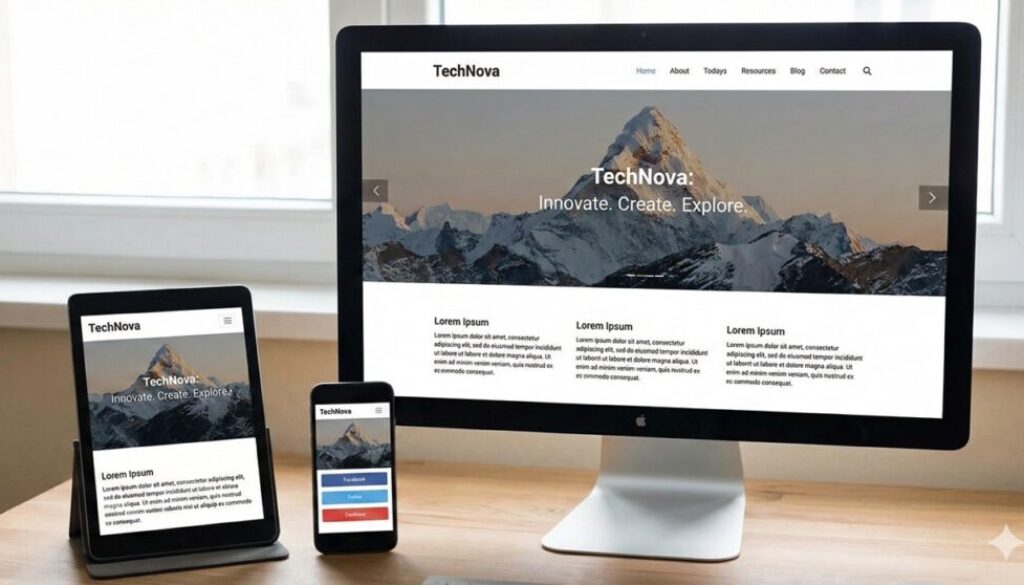
Is Your Website “Mobile-First”? Why Google’s Latest Updates Matter for Your Search Ranking
For years, web designers built websites for desktop computers first, and then “squashed” them down to fit on a phone. Today, that approach is obsolete.
Google has officially completed its transition to Mobile-First Indexing. This means that when Google “crawls” your website to decide where to rank you in search results, it looks at your mobile site first. If your mobile site is slow, hard to read, or missing content that appears on the desktop version, your search ranking will suffer.
Why This Matters for Schools and Business
- For Businesses: Over 60% of web traffic is mobile. If a potential client visits your site and has to “pinch and zoom” to read your services, they will leave. A poor mobile experience is a lost sale.
- For Schools: Parents are busy. They check term dates, newsletters, and closure alerts on their phones while on the go. If your school website isn’t optimised for mobile, you are creating barriers to parental engagement.
What is True “Responsive” Design?
Responsive design is more than just making things fit. It means:
- Speed: Mobile networks aren’t always fast. Your site needs to load images efficiently so it doesn’t eat up data or take 10 seconds to load.
- Navigation: Can a user navigate your menu with a thumb? Are the buttons big enough to tap without frustration?
- Readability: Is the text legible without zooming?
At Primary ICT Support, every website we build is Mobile-First as standard. We ensure that your digital front door looks welcoming, no matter what device your visitor is using.